Thursday, April 27, 2006


Wednesday, April 26, 2006
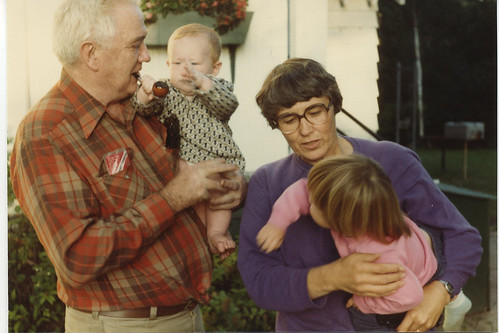
Dooga dooga: Grandpa Fitz
So well said by Jim that there is nothing to add.

For a wonderful look at JRF's legacy:
http://www.ironwoodglobe.com/0427fitz.htm
For a wonderful look at JRF's legacy:
http://www.ironwoodglobe.com/0427fitz.htm
Thursday, April 20, 2006

Friday, April 14, 2006

United Children of the World
Check out this wonderful blog - images of children from all over the world. Beauty.
Tuesday, April 11, 2006
Really - who doesn't love Brian Jungen...this Emily Carr graduate who is all the rage now...when I saw these images of his sculpture made out of nike parts after spending a week looking at Northwest Native totem poles and masks, I just wanted to holler - YES.
New Public as a news source is interesting - check out what they are doing with their site - well worth spending some time there.
New Public as a news source is interesting - check out what they are doing with their site - well worth spending some time there.
Monday, April 10, 2006
“Justice is Beautiful: Expanding the Paradigm of the Artists Book”
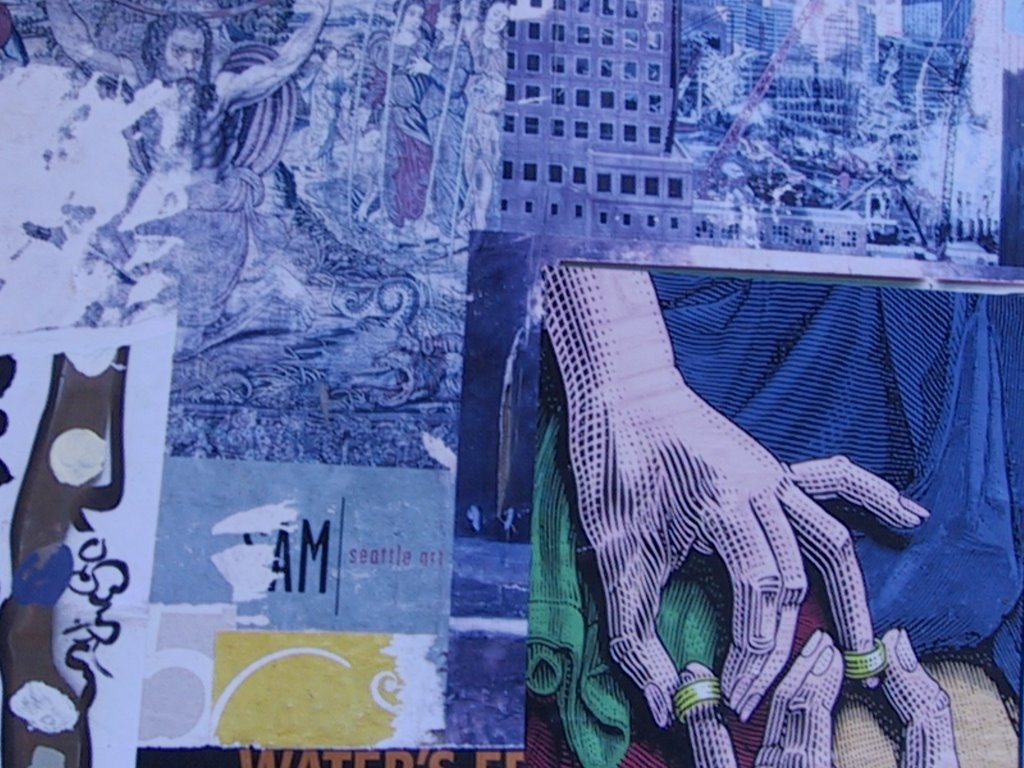
From an essay by Kurt Allerslev...
“What happens in a book when you're not reading it? A closed book is a treasure trove of wild possibility. The insides of a book when it sits closed on the shelf is not like the light in the refrigerator when you close the door -- you know that light goes out every time. It's designed to do that. Even if you don't see the light go out, you know it has.
The bookmaker, however, creates something that is meant to endure. The insides -- text and/or images -- stay lit up forever. But perhaps they wonder if you have gone out. The inside of the book doesn't know about the continuance of our existence when it's closed. What do we become to the closed book? What does the pollution, the cat, the car alarms and moldy ham sandwiches matter to a closed book? In closing, they are protected from that chaos that seeks to diminish and extinguish the beauty within.
I don't believe that the insides of books have a secret life that takes off when closed, the way we have a secret life when we close our eyes and dream. We are able to escape our everyday reality, exchange it for fleeting moments of other. The book, however is also not statically waiting for us to indulge it, but it grows and matures. The pages yellow, the text grows more meaningful and wise, or more dated and doddering. Every second, it changes as the world around it changes it's context. It is fed by every pair of eyes that fall on it, and it pays homage to the creators by providing a passage to a secret life that can be accessed by us as if dreaming.
You can't open the same book twice. Perhaps you can't even open the same book once. Like a river, it's changing as you open it. As the pages turn. And it changes as it sits on the shelf. A library full of books is a whirlpool of persistent change. We want text to solidify language, but language is too fluid. We are too fluid.”
Touching Base

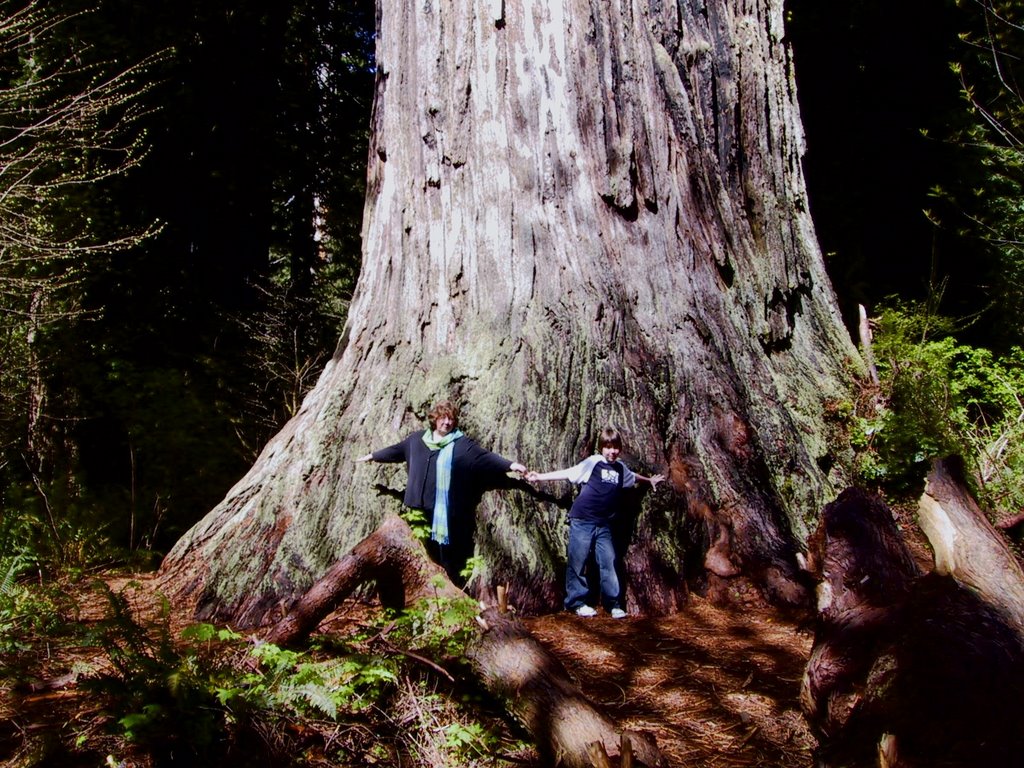
Home this morning after almost a month of travel - and not done yet...flying back out to Seattle in a week. This time with family to visit the Redwoods in northern CA.
I am sneaking up on the final months of this sabbatical year - and full of gratitude to have had the time to travel, research, reconnect and reflect. Most of all the reflection has been a powerful gift - and one that I realize more and more I have to have in order to really do anything else well. We have pretty much written it out of our daily lives - and I believe it numbs us to all kinds of evils. Speaking of reflection....
The Cloister Walk a favorite book - recounting (amoung other things) the time that writer Kathleen Norris spent at St. John's Abbey. She writes,
"Monastic people seek to weave ceremony through every mundane part of life: how one eats, how one dresses, how one treats tools, or enters a church are not left to whim. Ceremony is so large a part of what Benedictines do that it becomes second nature to many of them. The monastic life has this in common with the artistic one: both are attempts to pay close attention to objects, events, and natural phenomena that otherwise would get chewed up in the daily grind."
Earlier this year I spent some time in northern Minnesota at St. John's Abbey. I was there to talk to the folks at the Hill Museum and Manuscript Library about the St. John's Bible. This is the first bible that has been commissioned in the monastic tradition in 500 years. Those talks were extremely fruitful. Seven facsimile pages of the bible (stunning in their own right) will be coming to Milwaukee in January of 2007 as part of the exhibit that I am pulling (and this is exactly the right word some days!!) together this year.
More about this in the coming months - "Sacred Texts/Contemporary Forms: Spiritual Traditions in the Digital Age"
Yesterday I was able to stop by and introduce myself to Robin Kinney at the Bay View Book Arts Gallery. How wonderful to see this little jewel of a gallery within blocks of where I live and work. The work she is showing is worth stopping by to look at. I hope to have some images here soon as well.
Tuesday, April 04, 2006
George
Talking with George on the first of April.
"Heaven is a state of MINE, not yours..."
"Hey, you gota black window up your nose....APPLE FOOLS!!!!!"
I love this guy.

"Heaven is a state of MINE, not yours..."
"Hey, you gota black window up your nose....APPLE FOOLS!!!!!"
I love this guy.
Tuesday, March 28, 2006
The Mission near Santa Ynez

One of the most incredible things about getting off of the plane in California is the way the flora and fauna hits you in the head....especially if you are coming from the middle coasts where things are still grey and cold. I was so amazed to see palm trees and orange trees that the freeways were almost tolerable.....
Monday, March 20, 2006
Blind Date

Bill T. Jones is blogging on the Company's website (link on title) and is worth checking out. I originally saw Blind Date on March 4th at Alverno College. It was performed to an enthusiastic, packed house - who literally sat in stunned silence at the end of it before breaking into frantic applause. My dear 78 year old Mother-in-Law said it was the "best live performance she had ever seen in her life." This is high praise from a woman who has see a lot.
The evening before there was a panel discussion at Alverno, "Patriot Acts: Patriotism in the Era of the Patriot Act." Moderaterd by Amy Shapiro (Prof. of Philosophy, Alverno) it included Bill, along with Lt. Colonel Clark Backus (Prof. of Military Science, Marquette), Karine Mareno-Taxman (Asst. U.S. Attorney in WI), Sandra Graham (Prof. of Psychology, Alverno and Minister, United Church of Christ) and Roger Quindel (Milw. County Supervisor).
It was an interesting group...but I felt it never got off the ground because the audience (and perhaps the panelists) were confused by the title....taking the idea of the Patriot Act - literally the document itself - and tripping up on the fact that they didn't understand it enough to talk about it.
I wished that the discussion could have gone more in the direction of what one does in an age of undue restrictions - how might one retain her patriotism (or define it) during a time of avid disagreement with a government that seems to demand that patriotism be defined in terms of the corporate, the powerful, and the political....
The good thing was that all of these ideas about framing patriotism and leadership and difference were in the forefront of my brain as I sat watching the performance. The company contains these ideas - using movement, music and text together in a way that is powerful. It is a visual unfolding of the questions. It will stay with me for awhile.
These are confusing times.
Monday, March 06, 2006
The image below is a book that I made almost twenty years ago. Hand-made paper, hand-cast pulp - letterpress and the pictograph-like images are made using xerox toner and fusing it in my oven....
I was thinking about it today - John and I coming up on thirty some years of marriage this year. The text in the book is this poem by Margaret Atwood. It is still true today.
I was thinking about it today - John and I coming up on thirty some years of marriage this year. The text in the book is this poem by Margaret Atwood. It is still true today.
| Marriage is not a house or even a tent it is before that, and colder: The edge of the forest, the edge of the desert the unpainted stairs at the back where we squat outside, eating popcorn where painfully and with wonder at having survived even this far we are learning to make fire Margaret Atwood |
Wednesday, March 01, 2006
OH GEEEEZ.....

Sorry people. I haven't been a regular blogger of late. Lots of projects going on, lots of ruminating - gearing up for a big trip to the west coast - LA / Portland / Seattle and points in between. I am starting to feel the pressure....the sabbatical year is half over. There are two major projects in process - but with HUGE amounts of research and work yet to be done.
In the last seven days I have given three lectures about the work I am doing - which is the first time I've talked these projects to large groups of people. More on a regular basis - I promise.
Friday, February 17, 2006

Tuesday, February 14, 2006
Museum of Life and Death
Last Friday Fitz and I went to the nursing home to visit his father, John Sr. Nearing the end of a long, ugly battle with Parkinson's, these "visits" are bereft of any of the usual social graces that we tend to think of when we imagine visiting with someone. There are none of the usual niceties, no small-talk (any conversation takes a huge effort and focus), we often wonder where John thinks we are - or where he thinks he is.
We like to bring brandy manhattens in a silver shaker - served over ice in the same small glasses that John used when made them in his whiskey pantry in Ironwood and served them to guests at the end of the day. It is getting almost impossible for him to hold the glass, or sip them without a great amount of drama. Soon he (we) will be robbed of even this small pleasure.
We reconfigure our thinking, yet again....the sadness mixed with the mystery and wonder.
Leaving there, we drive downtown to see friends Mark and Isabelle in their new production (with Andy Kishner) of "The Museum of Life and Death." On the way, Fitz remarks that it will take an enormous effort to compete with our visit with Dad. But the piece is an enormous effort - and it doesn't compete - it compliments.
A combination of drama, dance, performance art and mixed media - it is a futuristic retelling of a medievil morality play, "Everyman." Death comes for Everyman and tells him to make an accounting of his life. He comes to realize that no one, not "True Love," "Beauty," "Strength," or "Knowledge" will accompany him on this journey and he must go alone.
The projected images and use of shadows worked with the stage performances to create a stong, universal and sometimes bittersweet accounting of our age old - and universal - attempt to understand death. However it comes.
Monday, January 16, 2006

What a wonderful world
I "met" Wayne through his photos on flickr - which are exceptional. I had to publish this one with a link to his blog as well. It is such a lovely counterpoint to Lindsay and Barb's piece.
We all do want the same things - I know this more and more - no matter where we find ourselves on the planet.
Peace
We all do want the same things - I know this more and more - no matter where we find ourselves on the planet.
Peace
Monday, January 09, 2006

Wednesday, January 04, 2006
Sunday, January 01, 2006
Interesting
SEEING OUT LOUD
by Jerry Saltz
©2005 Jerry Salt/ Village Voice
by Jerry Saltz
This month is my seven-year anniversary at the Village Voice, so I thought I'd use Frieze magazine's recent queries to me about the "de-skilling of art criticism" and "our post-critical era" as a way to write about what I think I'm trying to do here. First, I fretted I was the kind of "de-skilled" critic Frieze was referring to. I have no degrees. I started out as an artist, stopped painting, and became a long-distance truck driver. My CB handle was "the Jewish Cowboy":
Shalom, partner. I didn't begin writing criticism until I was almost 40. All I knew was I loved art and had to be in the art world. The truth is, I wasn't sure what Frieze meant by "de-skilled." It sounded vaguely bad. But to me de-skilled means unlearning other people's ideas of skill. All great contemporary artists, schooled or not, are essentially self-taught and are de-skilling like crazy. I don't look for skill in art; I look for originality, surprise, obsession, energy, experimentation, something visionary, and a willingness to embarrass oneself in public. Skill has nothing to do with technical proficiency; it has to do with being flexible and creative. I'm interested in people who rethink skill, who redefine or reimagine it: an engineer, say, who builds rockets from rocks.
The best critics look for the same things in contemporary criticism that they look for in contemporary art. But they also have an eye. Having an eye in criticism is as important as having an ear in music. It means discerning the original from the derivative, the inspired from
the smart, the remarkable from the common, and not looking at art in narrow, academic, or "objective" ways. It means engaging uncertainty and contingency, suspending disbelief and trying to create a place for doubt, unpredictability, curiosity and openness.
Dishearteningly, many critics have ideas but no eye. They rarely work outside their comfort zone, are always trying to reign art in, turn it into a seminar or a clique, or write cerebral, unreadable texts on mediocre work. There's nothing wrong with writing about weak art as
long as you acknowledge the work's shortcomings. Seeing as much art as you can is how you learn to see. Listening very carefully to how you see, gauging the levels of perception, perplexity, conjecture, emotional and intellectual response, and psychic effect, is how you learn to see better.
Art is a way of thinking, a way of knowing yourself. Opinions are tools for listening in on your thinking and expanding consciousness. Many writers treat the juiciest part of criticism, judgment, as if it were tainted or beneath them. The most interesting critics make their opinions known. Yet in most reviews there's no way to know what the writer thinks, or you have to scour the second-to-last paragraph for one negative adjective to detect a hint of disinclination. This is
no-risk non-criticism. Being "post-critical" isn't possible. Everyone is judging all the time. Critics who tell you they're not judging or that they're being objective are either lying or delusional. Being critical of art is a way of showing it respect. Being subjective is being human.
Yet people regularly say, "You shouldn't write on things you don't like." This breaks my heart. No one says this to theater critics, film reviewers, restaurant critics, or sports writers. No one says, "Just say all the food was good." Nowadays, many see criticism mainly as a sales tool or a rah-rah device. Too many critics enthuse over everything they see or merely write descriptively. This sells everyone short and is creating a real disconnect. People report not liking 80 percent of the shows they see, yet 80 percent of reviews are positive or just descriptive.
Obviously, critics can't just hysterically love or hate things, or assert that certain types of art or media are inherently bad (e.g., no one has actually believed that painting is dead since the Nixon
administration, yet writers regularly beat this dead horse). Critics must connect their opinions to a larger set of circumstances; present cogent arguments; show how work does or doesn't seem relevant, is or isn't derivative; explain why an artist is or isn't growing. As with Melville's ideas about art, criticism should have: "Humility -- yet pride and scorn/Instinct and study; love and hate/Audacity and reverence." Good criticism should be vulnerable, chancy, candid, and
nervy. It should give permission, have attitude, maybe a touch of rebellion, never be sanctimonious or dull, and be written in a distinctive, readable way. Good critics should be willing to go onintuition and be unafraid to write from parts of themselves they don't really know they have.
If criticism is in trouble, as many say, it's because too many critics write in a dreary hip metaphysical jargon that no one understands except other dreary hip metaphysicians who speak this dead language. They praise everything they see, or only describe. These critics are like the pet owner who sews up the cat to stop it from fouling the sofa: Tbhey keep the couch clean but kill the cat.
Shalom, partner. I didn't begin writing criticism until I was almost 40. All I knew was I loved art and had to be in the art world. The truth is, I wasn't sure what Frieze meant by "de-skilled." It sounded vaguely bad. But to me de-skilled means unlearning other people's ideas of skill. All great contemporary artists, schooled or not, are essentially self-taught and are de-skilling like crazy. I don't look for skill in art; I look for originality, surprise, obsession, energy, experimentation, something visionary, and a willingness to embarrass oneself in public. Skill has nothing to do with technical proficiency; it has to do with being flexible and creative. I'm interested in people who rethink skill, who redefine or reimagine it: an engineer, say, who builds rockets from rocks.
The best critics look for the same things in contemporary criticism that they look for in contemporary art. But they also have an eye. Having an eye in criticism is as important as having an ear in music. It means discerning the original from the derivative, the inspired from
the smart, the remarkable from the common, and not looking at art in narrow, academic, or "objective" ways. It means engaging uncertainty and contingency, suspending disbelief and trying to create a place for doubt, unpredictability, curiosity and openness.
Dishearteningly, many critics have ideas but no eye. They rarely work outside their comfort zone, are always trying to reign art in, turn it into a seminar or a clique, or write cerebral, unreadable texts on mediocre work. There's nothing wrong with writing about weak art as
long as you acknowledge the work's shortcomings. Seeing as much art as you can is how you learn to see. Listening very carefully to how you see, gauging the levels of perception, perplexity, conjecture, emotional and intellectual response, and psychic effect, is how you learn to see better.
Art is a way of thinking, a way of knowing yourself. Opinions are tools for listening in on your thinking and expanding consciousness. Many writers treat the juiciest part of criticism, judgment, as if it were tainted or beneath them. The most interesting critics make their opinions known. Yet in most reviews there's no way to know what the writer thinks, or you have to scour the second-to-last paragraph for one negative adjective to detect a hint of disinclination. This is
no-risk non-criticism. Being "post-critical" isn't possible. Everyone is judging all the time. Critics who tell you they're not judging or that they're being objective are either lying or delusional. Being critical of art is a way of showing it respect. Being subjective is being human.
Yet people regularly say, "You shouldn't write on things you don't like." This breaks my heart. No one says this to theater critics, film reviewers, restaurant critics, or sports writers. No one says, "Just say all the food was good." Nowadays, many see criticism mainly as a sales tool or a rah-rah device. Too many critics enthuse over everything they see or merely write descriptively. This sells everyone short and is creating a real disconnect. People report not liking 80 percent of the shows they see, yet 80 percent of reviews are positive or just descriptive.
Obviously, critics can't just hysterically love or hate things, or assert that certain types of art or media are inherently bad (e.g., no one has actually believed that painting is dead since the Nixon
administration, yet writers regularly beat this dead horse). Critics must connect their opinions to a larger set of circumstances; present cogent arguments; show how work does or doesn't seem relevant, is or isn't derivative; explain why an artist is or isn't growing. As with Melville's ideas about art, criticism should have: "Humility -- yet pride and scorn/Instinct and study; love and hate/Audacity and reverence." Good criticism should be vulnerable, chancy, candid, and
nervy. It should give permission, have attitude, maybe a touch of rebellion, never be sanctimonious or dull, and be written in a distinctive, readable way. Good critics should be willing to go onintuition and be unafraid to write from parts of themselves they don't really know they have.
If criticism is in trouble, as many say, it's because too many critics write in a dreary hip metaphysical jargon that no one understands except other dreary hip metaphysicians who speak this dead language. They praise everything they see, or only describe. These critics are like the pet owner who sews up the cat to stop it from fouling the sofa: Tbhey keep the couch clean but kill the cat.
©2005 Jerry Salt/ Village Voice
Subscribe to:
Posts (Atom)